
The SMART framework can help you turn a broad aim such as “learn Spanish” into a practical plan. It is a planning tool, not a guarantee of fluency or a fixed timetable for learning.
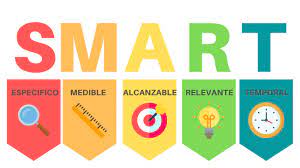
Goals should be:
Specific: Define the aspect of Spanish you want to work on and what you want to be able to do. For example, prepare to order a meal or have a short conversation about your day. Include listening and reading as well as speaking: choose short recordings and texts you can mostly understand, and use something from them in your own sentences.
Measurable: Establish how you will check your progress. The original examples—learning 30 words per week or having a five-minute dialogue each day—can be starting points, not targets every learner should meet. Adjust the amount to your level and available time, and check whether you can recall and use the words later.
For vocabulary, try recalling a word or phrase before checking it, then return to it on another day. Research on learning supports retrieval practice and spreading practice over time, although it does not prescribe one ideal schedule for every Spanish learner. Dunlosky and colleagues’ review of learning techniques.
Achievable: Set realistic goals for your starting point, available practice and purpose. Rather than deciding that fluency must—or cannot—happen in three months, choose a concrete task you can work towards and revise the goal as you learn.
You can start speaking with short, supported exchanges; you do not need to wait until your Spanish is perfect. Ask for clarification or feedback when you need it. Mistakes are a reason to notice and practise something, not a reason to avoid conversation.
Relevant: Choose goals that matter to you. If you like music, listening to songs, watching subtitled videos and reading the lyrics may be motivating. Pick material that suits your interests and level rather than assuming that any exposure will be enough.
Give grammar a practical role: work on a pattern you need, then try it in speech or writing. A dictionary or a translation can help clarify meaning; check example sentences and context instead of assuming that words always match one for one. You can create opportunities to use Spanish where you live; being surrounded by it is an opportunity to practise, not a guarantee of learning.
Time-bound: Set a date to review your goal. What would you like to be able to do on your next trip to Latin America? Plan manageable practice sessions across the week, and adjust the routine to what you can sustain. There is no single daily number of minutes that guarantees progress.
Write your SMART goals
Use these questions to make your plan concrete, then revisit it as your needs change:
- Specific: What do you want to achieve?
- Measurable: How are you going to measure your progress?
- Achievable: How will you work towards your goal, and is it realistic with the time and support you have?
- Relevant: Why is this objective important to you?
- Time-bound: When will you review what you have achieved?